Mount Meru, rising to 4,566 meters (14,980 feet), is Tanzania’s second-highest peak and a captivating destination for adventurers seeking a scenic yet challenging climb. Nestled within Arusha National Park, this majestic volcano offers a quieter, more intimate trekking experience than Kilimanjaro, allowing hikers to fully immerse themselves in its rich landscapes, diverse ecosystems, and abundant wildlife.
The trek, typically 3-4 days, unfolds across a series of stunning ecological zones. The journey begins in the Montane Forest (1,500-2,900 m), where lush rainforest envelops the trail, and wildlife such as colobus monkeys, bushbucks, and colorful birds are frequent companions. Waterfalls, streams, and the gentle rustle of leaves create a serene atmosphere, perfect for easing into the altitude.
As the trail ascends into the Heath and Moorland (2,900–3,700 m), the scenery transforms into dramatic highlands adorned with towering giant lobelias and groundsel plants, giving the landscape a striking, almost otherworldly appearance. Here, the air becomes crisper, and sweeping vistas of the surrounding plains hint at the grandeur yet to come.
The final stretch leads through the Alpine Desert and Summit Zone (3,700–4,566 m), characterized by rugged volcanic slopes, rocky ridges, and sparse vegetation. From the summit, trekkers are rewarded with panoramic views of Mount Kilimanjaro, the shimmering waters of Lake Natron, and the vast expanse of the Rift Valley, a sight that epitomizes the magic of East Africa’s highlands.
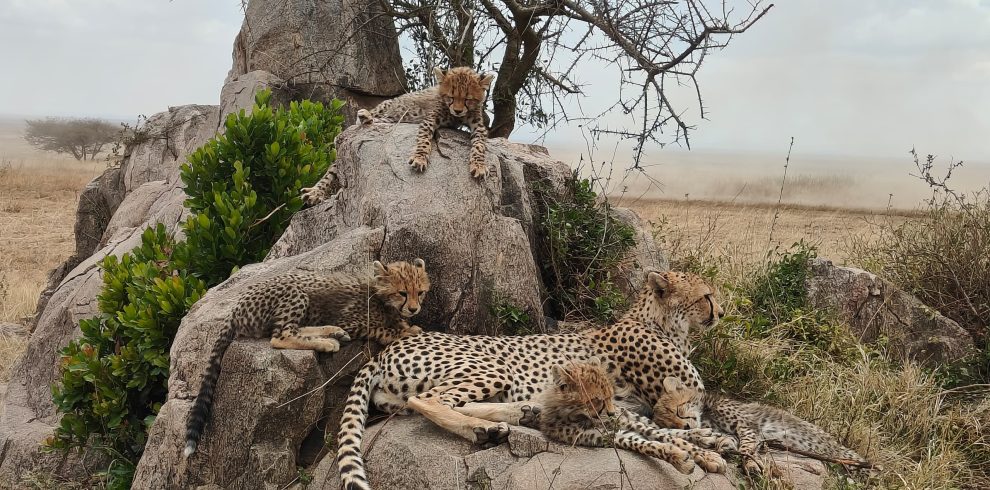
Mount Meru is celebrated for its wildlife encounters, breathtaking vistas, and volcanic scenery, all enjoyed on trails that remain peaceful and uncrowded. Most treks begin at Momella Gate, with overnight stays at Miriakamba and Saddle Huts, and culminate in a midnight summit ascent, timed to greet the sunrise from the peak. Moderately challenging yet immensely rewarding, Mount Meru offers a memorable adventure for fit hikers eager to experience the beauty and drama of Tanzania’s volcanic landscapes.